
Inside EHF: Beyond Health Care is a new series from our team exploring how non-medical factors shape health across Texas. From transportation to food access to public policy, we’ll take a closer look at forces outside the doctor’s office that influence whether people can live long, healthy lives.
In this edition: Shao-Chee Sim, EHF’s Executive VP for Health Policy, Research & Strategic Partnerships, writes that with Texas evaluating Medicaid coverage for diabetes prevention and new rural health investments beginning to flow, a unique window is emerging to move from managing diabetes to preventing it.
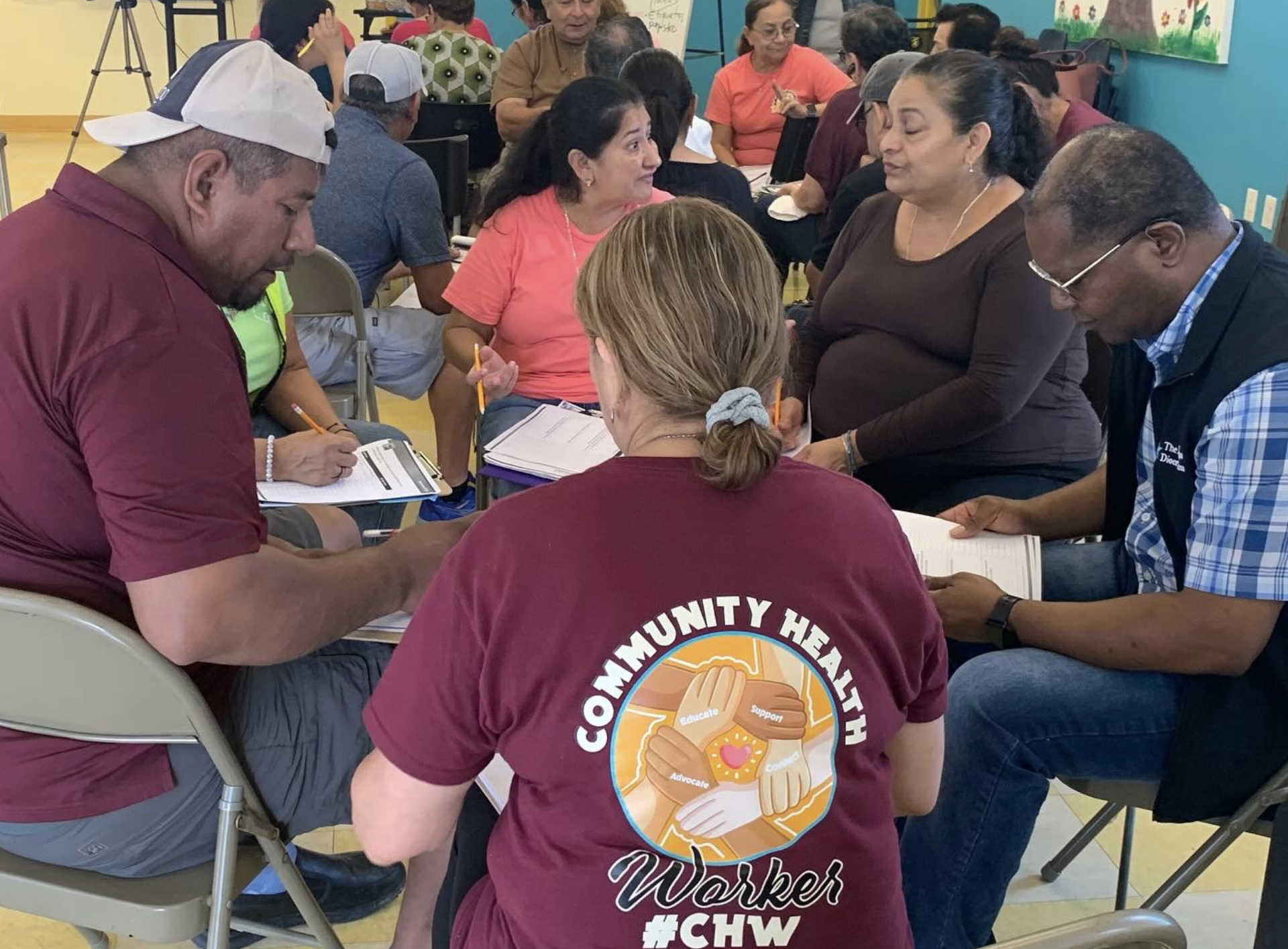
Residents of Southwest Houston participate in Gulfton Home Community’s diabetes prevention class.

Shao-Chee Sim
EHF's Executive VP for Health Policy, Research & Strategic Partnerships
Diabetes has become one of the most significant health and fiscal challenges facing Texas.
EHF’s recent statewide poll shows nearly half of all Texas adults say they live in a household experiencing diabetes. More than one in three Texas adults has prediabetes, and most are unaware of their risk. Without early intervention, many will progress to type 2 diabetes—bringing increased risks of cardiovascular disease, kidney failure, and other serious complications.
For Texas Medicaid, the implications are substantial. Diabetes-related care is estimated to cost $8.1 billion annually—nearly 21 percent of total program spending, as documented in the Milliman Diabetes Prevalence and Costs in Texas Medicaid report.
At the same time, strong evidence shows that prevention works. Participation in evidence-based lifestyle interventions can reduce the risk of developing type 2 diabetes by as much as 58 percent.
Taken together, these realities point to a clear conclusion: Texas is not limited to managing diabetes. It has a pathway to prevent it.
A Broader Shift: Federal Momentum Toward Prevention
This opportunity in Texas is unfolding within a broader shift at the federal level.
Under the Make America Healthy Again (MAHA) initiative, federal agencies are increasingly focused on addressing the root causes of chronic disease and expanding prevention-based approaches to care. Federal data highlight the urgency of this shift—nearly 40 percent of Americans are diabetic or prediabetic, and chronic disease remains one of the defining drivers of health care cost and outcomes.
This shift is also reflected in new payment and delivery models. The MAHA ELEVATE initiative is testing prevention-oriented approaches that emphasize lifestyle and whole-person care with the goal of improving outcomes and reducing long-term costs.
At the same time, broader federal investments such as the Rural Health Transformation Program are explicitly designed to strengthen prevention infrastructure and expand access to community-based care.
Together, these shifts signal a clear direction: health systems are beginning to move from treating chronic disease after it occurs to preventing it before it begins.
Building the Case: Research Driving Policy Momentum
Over the past several years, Episcopal Health Foundation (EHF) has played a central role in building the evidence base and advancing policy dialogue around diabetes prevention.
This work includes:
- The Milliman Diabetes Prevalence and Costs in Texas Medicaid report, quantifying the scale of Medicaid spending
- The Diabetes Prevention Programs in Texas: Landscape Analysis, identifying delivery capacity and barriers
- The Milliman Diabetes Prevention Literature Review, synthesizing effectiveness and cost evidence
- The Centers for Health Care Strategies analysis outlining Medicaid coverage pathways and lessons from other states
- The Digging Deeper blog, Transforming Rural Health in Texas, highlighting structural access gaps
Across these efforts, a consistent theme emerges: Texas has prevention programs and community capacity, but lacks the financing and system alignment needed to scale them.
From Evidence to Policy: Medicaid Reimbursement as a Pathway to Sustainability
The National Diabetes Prevention Program (National DPP) provides a clear pathway for translating evidence into action. Yet across Texas, most DPP providers operate within a fragmented system that relies on grants, navigating administrative barriers, and lacking consistent reimbursement pathways.
This is why Medicaid reimbursement represents a critical policy opportunity.
The 2025 Texas Legislature directed HHSC to evaluate the feasibility and cost-effectiveness of covering diabetes prevention services for Medicaid recipients, with findings due in 2026. Importantly, this creates not just a study, but a pathway. If the findings demonstrate improved outcomes and cost savings, Medicaid could become a sustainable financing mechanism for prevention.
This distinction matters. Federal and philanthropic funding can help launch programs, but it is inherently time-limited. Medicaid reimbursement offers the opportunity to institutionalize prevention within the health care system.
Rural Texas Strong: Scaling Prevention Across Rural Communities
At the same time, Texas has secured a major new federal investment through the Rural Health Transformation Program, known in Texas as Rural Texas Strong. The state is expected to receive approximately $1.4 billion over five years to strengthen rural health systems and improve health outcomes.
A key initiative—“Make Rural Texans Healthy Again”—focuses on expanding community-based prevention, wellness, and nutrition programs targeting chronic diseases such as diabetes. Initial funding includes tens of millions of dollars for rural providers to expand prevention programming, with resources expected to reach communities across Texas’ 202 rural counties.
While this funding does not directly establish Medicaid DPP benefits, it creates a critical opportunity: to scale DPP program investment, innovation, and delivery capacity across rural communities.
A Strategic Alignment: Scaling Now, Sustaining Over Time
Taken together, these policy pathways create a complementary strategy:
- Rural Health Transformation funding → scales and expands prevention capacity
- Medicaid reimbursement → sustains those efforts over the long term
This alignment is especially important because Rural Texas Strong funding is time-limited, with federal funding anticipated through 2030.
Medicaid coverage, by contrast, can extend beyond that window and create continuity and long-term impact. The opportunity is to build now and sustain later.
A Historic Policy Window for Texas
It is rare for multiple policy streams to align at the same time.
Texas now has:
- A clearly defined Medicaid cost burden
- A legislative pathway to evaluate DPP reimbursement
- A major federal investment in rural health infrastructure
- A national policy environment increasingly focused on prevention
This convergence creates a unique policy window and a moment of strategic choice.
Conclusion: Seizing the Opportunity to Move Upstream
Texas is at an inflection point. Rural Texas Strong provides the opportunity to scale prevention across communities, particularly in rural areas. Medicaid reimbursement offers a pathway to sustain those efforts over time. Federal policy momentum reinforces the urgency of shifting upstream.
Taken together, these are not isolated developments. They represent a rare opportunity to connect policy, financing, and delivery systems around prevention.
Moving upstream is no longer just a concept. It is a policy opportunity that can reduce long-term costs and improve health outcomes for all Texans.