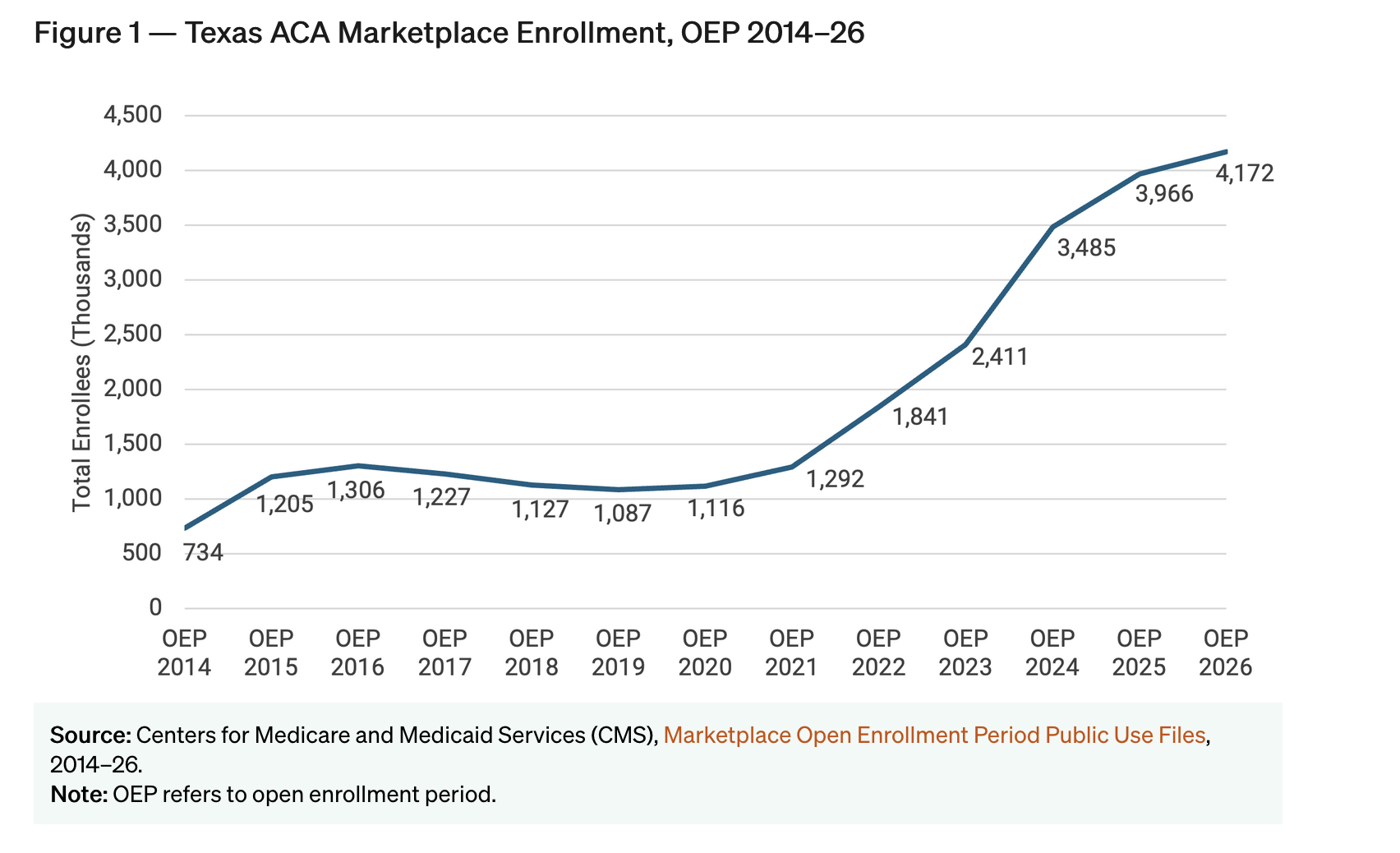
More than 4 million Texans enrolled in ACA health insurance plans for 2026. Most Texans with ACA coverage are low-income and still qualify for financial help. About 96% of enrollees still fall within subsidy-eligible income ranges, which kept their monthly costs relatively low even after the enhanced subsidies ended. But the report also points to a gap between enrollment and ongoing health insurance coverage. Some Texans could likely struggle with monthly premiums after signing up, which may lead to lost health insurance coverage later in the year.
2. Texans are actively adjusting their ACA health insurance plans to manage costs.
More Texans are switching plans or moving between tiers of ACA coverage during open enrollment. Many are choosing lower-premium options, even if that means higher deductibles or out-of-pocket costs, showing how affordability pressures are shaping decisions year to year.
A new report from Rice University’s Baker Institute for Public Policy, co-authored by EHF’s Shao-Chee Sim and Baker Senior Fellow in Health Policy Elena Marks, looks at what’s happening with Affordable Care Act (ACA) health insurance enrollment in Texas in 2026.
It shows how Texas reached record enrollment, what’s driving those gains, and what’s changing beneath the surface.
Three takeaways:
1. Enrollment kept growing, even with federal subsidy uncertainty, but staying covered is harder than signing up.