
Takeaways from a Survey of Texas Food Organizations
EHF partnered with the Baylor Collaborative on Hunger and Poverty to map the landscape of Texas-based food organizations and identify potential partnership opportunities. The findings from these surveys and interviews offer valuable insights into strengthening partnerships between healthcare systems and community-based food organizations.

The Role of SNAP in Addressing Food Insecurity in Texas
Learning about the Supplemental Nutrition Assistance Program (SNAP) in Texas, formerly called ‘food stamps’, and its possible role in reducing obstacles to health and well-being is essential for our efforts to address food insecurity.

Texas’ Medicaid Managed Care Learning Collaborative: Origin, Contexts, and Key Takeaways from 2024 Efforts
Episcopal Health Foundation (EHF) launched a partnership with key stakeholders more than six years ago to harness the capacity of MCOs in addressing non-medical needs of Medicaid members. The Learning Collaborative’s work has contributed to key legislation and policy changes that advance the NMDOH work of Medicaid MCOs to continually improve the health and well-being of their members.
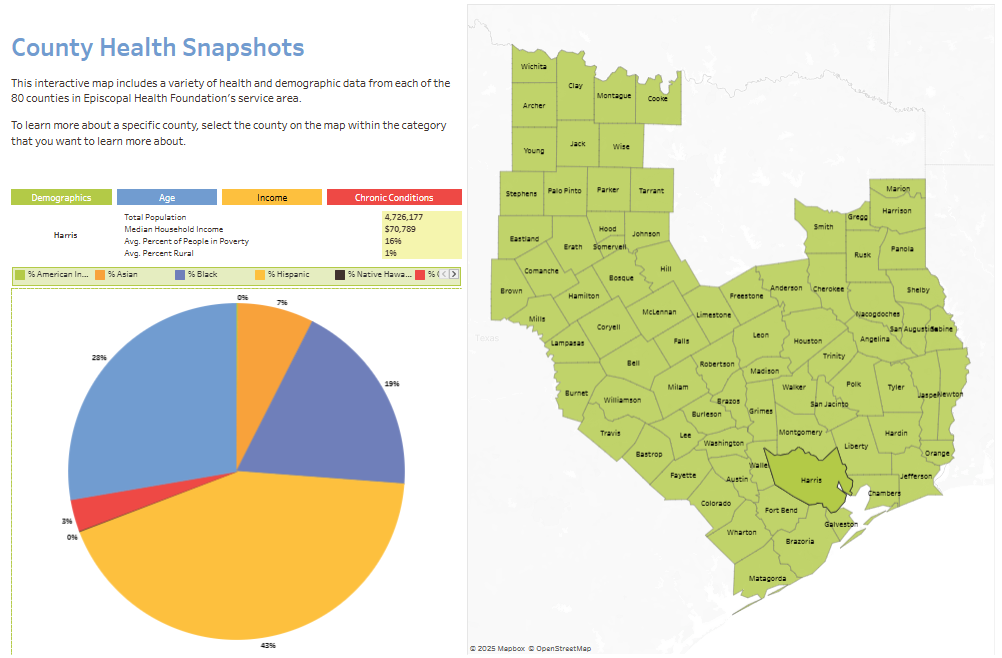
Understanding Community Health Through Data Mapping
EHF’s research team has released an updated and improved County Health Snapshots data mapping tool. EHF’s County Health Snapshots (CHS) tool provides a peek into the important demographic factors and health outcomes within the EDOT.

Key Takeaways from EHF’s Policy and Research Reports in 2024
As a major health philanthropy in Texas, EHF has developed a diverse range of tools, both financial and non-financial, that help to improve the health of all Texans.
Digging Deeper Digest: 2024 Recap
This year, EHF’s Research and Evaluation team launched “Digging Deeper,” collaborating with trusted partners to analyze the research topics and health trends that are central to EHF’s vision for a healthier Texas.