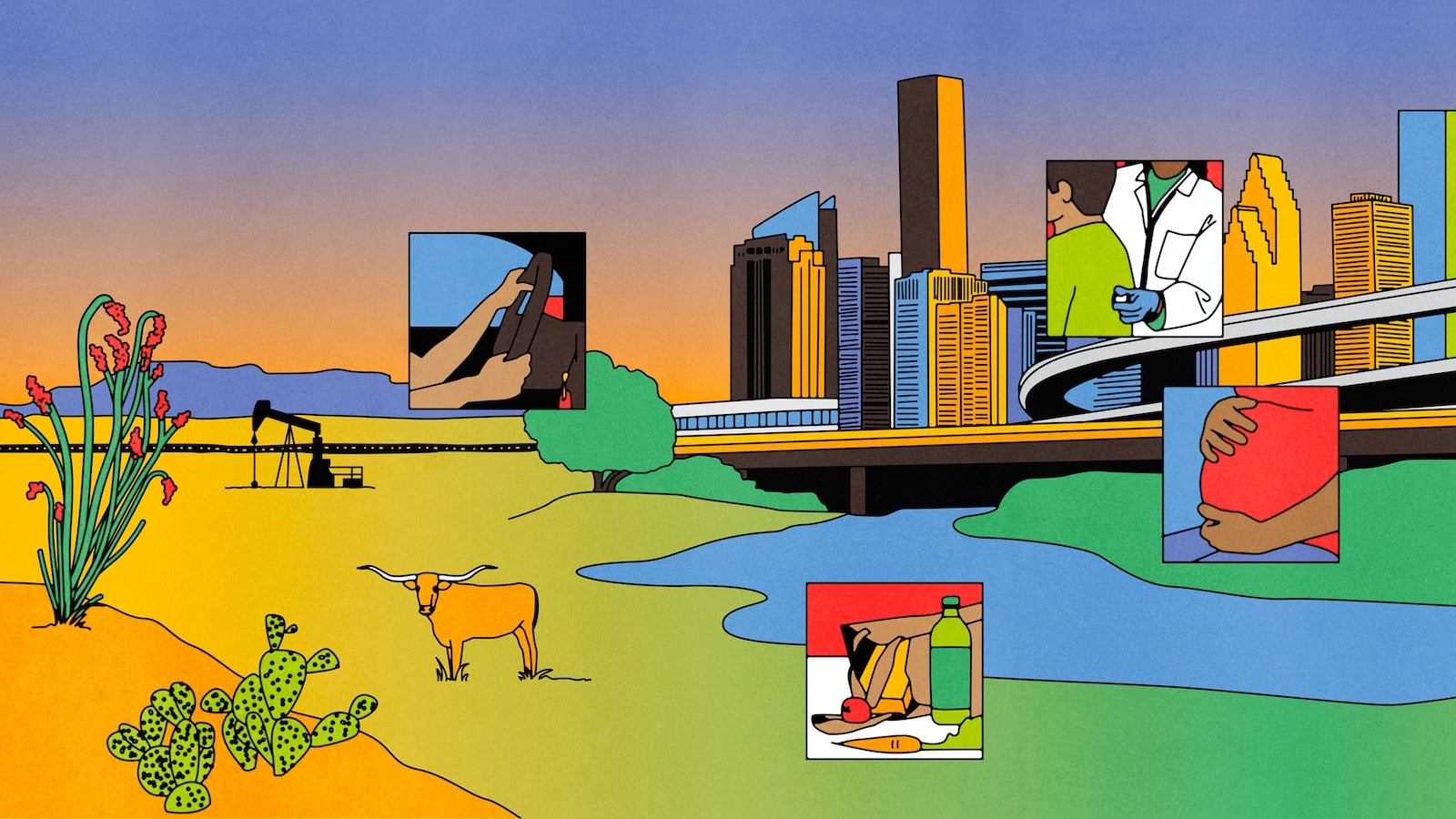
Six in 10 Texas adults say they skipped or postponed health care because of cost in the past year. That’s just one of several findings in an expanded edition of the annual statewide poll from Episcopal Health Foundation (EHF) showing that affordability continues to be a major barrier to better health in Texas, especially for those who also struggle to afford food or manage chronic health conditions.
The annual EHF Texas Health Tracking Poll also shows how health care affordability, food insecurity, and health are closely connected. Food-insecure Texans are more than 4.5 times as likely to have medical bill problems as those who are food secure, and health outcomes steadily worsen as food security decreases. Texans who regularly run short of food are about 4 times as likely to report fair or poor mental health and more than 3 times as likely to report fair or poor physical health as food-secure Texans. That connection is especially clear for chronic conditions: 57% of Texas households affected by diabetes or prediabetes say they cannot afford balanced meals.
New this year, EHF has launched the Texas Health Tracking Poll website. It’s interactive and designed to tell a deeper story about health and affordability and give decision makers a clearer picture of the many barriers Texans face to good health. The site brings together eight years of EHF polling data for comparison and analysis. It also lets users explore every question from the 2025 poll and compare results across different groups.

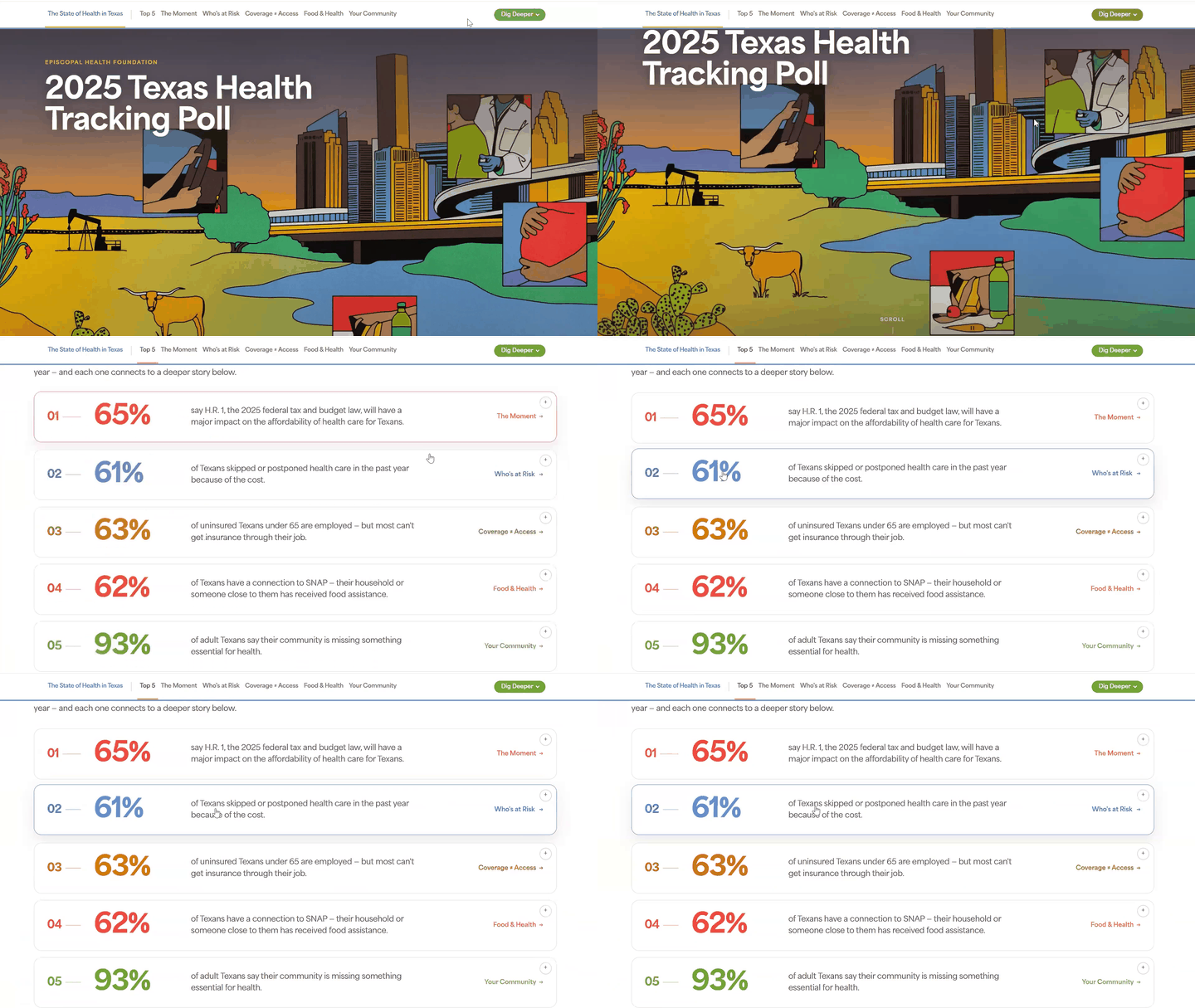
A different way to tell the story behind the numbers
EHF launched the interactive website to make the polling more than a collection of statewide statistics. It gives policymakers, community leaders, health organizations, and others a way to see who is most affected, how different barriers are connected, and how Texans’ experiences have changed over time.
The site brings together eight years of polling trends and a Data Explorer where users can dig into every question from the 2025 poll. Results can be explored by population group, region, income, health insurance coverage, and other factors.
Users can also create their own customized information sheets directly from the website. They can add charts and statistics as they explore the data, highlight text to capture quotes, and add their own notes. They can then download everything as a one-page PDF to share or print.
“We want this information to be used in lots of different ways,” Barnes said. “When decision makers can see what Texans are experiencing and where barriers are hitting hardest, they can make better decisions about where change is needed most.”
Join us for a webinar at 11am on Oct 13
Key findings from EHF’s annual Texas Health Tracking Poll
Cost is keeping Texans from getting health care.
- 61% of Texas adults skipped or postponed at least one type of health care because of cost.
- 37% skipped three or more types of care.
- The types of care skipped include recommended check-ups, tests or treatments, filling prescriptions, medication doses, dental care, mental health care, and other needed health care.
Texans facing the greatest challenges are often dealing with several barriers at the same time.
- Food-insecure Texans are 4.5 times as likely to have medical bill problems as food-secure Texans.
- 80% of Texans who regularly run short of food report medical bill problems, compared with 18% of food-secure Texans.
- 49% of Texans who regularly run short of food report fair or poor mental health, compared with 12% of food-secure Texans.
- 47% report fair or poor physical health, compared with 13% of food-secure Texans.
Nearly every Texas community is missing something people need to be healthy.
- 93% of Texas adults say their community lacks at least one important non-medical resource that can affect health.
- The poll measures access to community resources including affordable healthy food, good jobs, quality childcare, safe places to exercise, reliable transportation, health care providers, and affordable housing.
- 77% of rural Texans say their community lacks adequate public transportation, compared with 53% of urban Texans.
- Rural Texans report larger shortages than urban Texans across every community resource measured.
Texans are increasingly concerned the state could do more to help people access health care.
- 70% of Texans say the state isn’t doing enough to help low-income adults access care.
- 59% say the state isn’t doing enough for children.
- 53% say the state isn’t doing enough for pregnant women.
- All three are at their highest levels in the eight years EHF has conducted the poll.
SNAP, food affordability, and chronic health conditions are closely connected.
- 62% of Texans say their household or someone close to them has received SNAP food assistance.
- 49% of Texas households include someone with diabetes or prediabetes.
- 57% of households affected by diabetes or prediabetes say they cannot afford balanced meals.