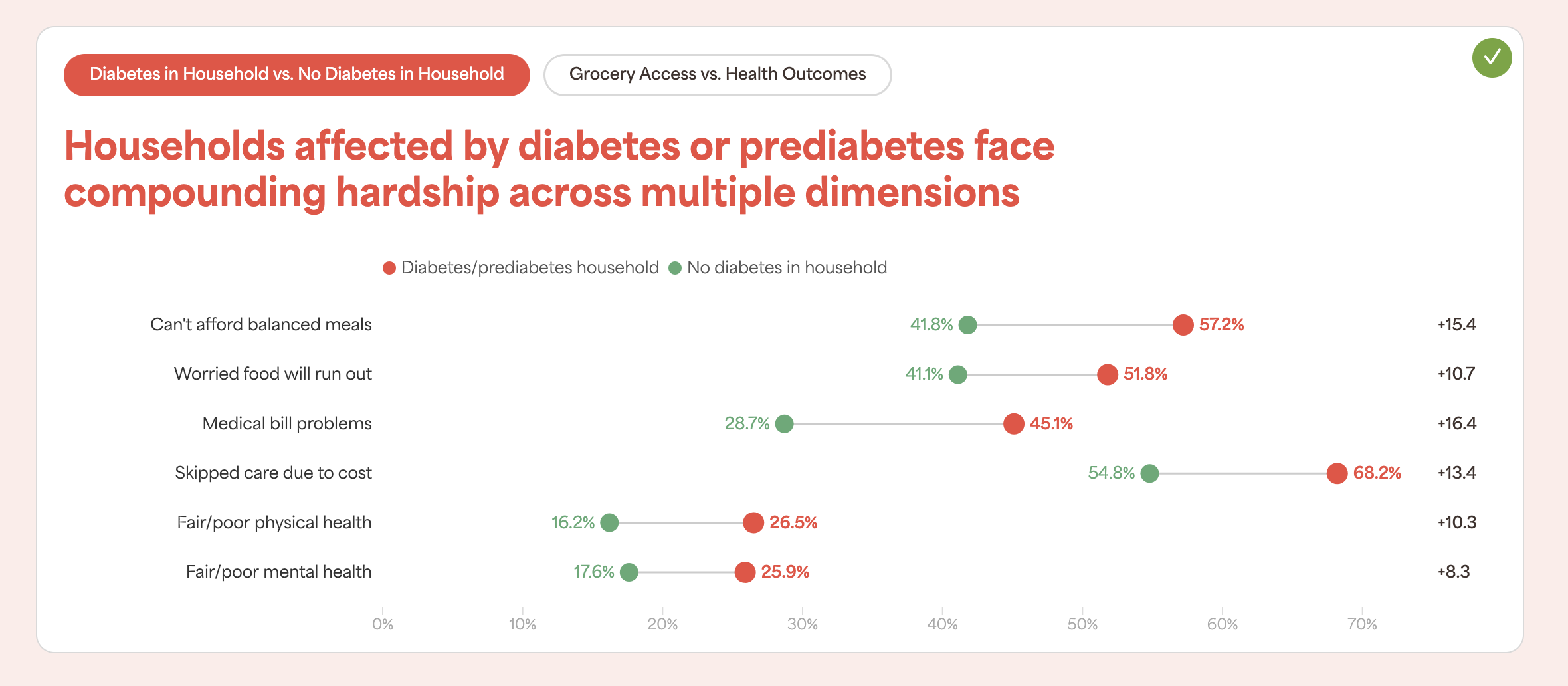
Nearly half of Texas households include someone with diabetes or prediabetes. But EHF’s latest Texas Health Tracking Poll shows that many families managing those conditions are also struggling to afford the food needed to stay healthy.
Among Texas households affected by diabetes or prediabetes, 57% say they can’t afford balanced meals. That compares with 41% of households without those conditions.
Where Texans live can create another barrier. The poll found that communities without adequate grocery stores have a prediabetes rate 8 percentage points higher than communities with adequate grocery access.
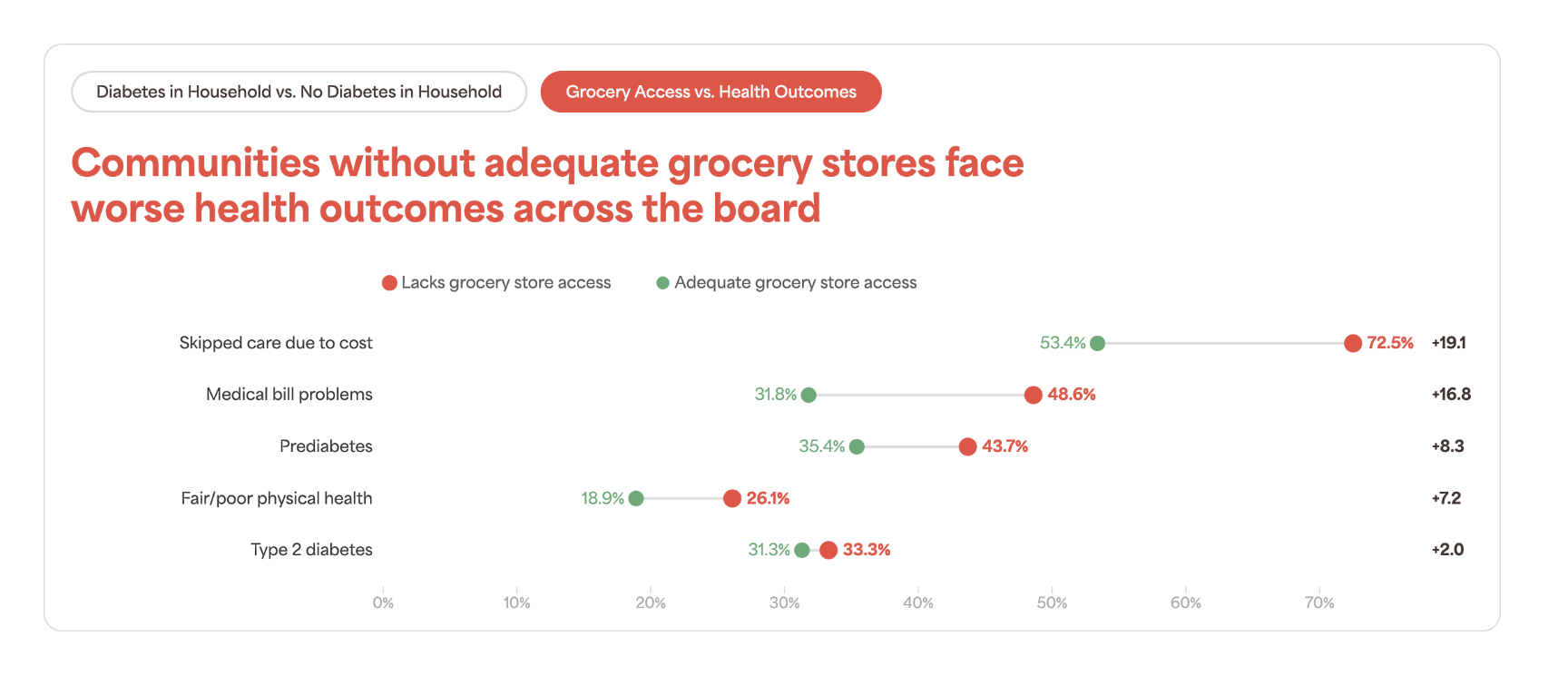
Those findings help show why preventing diabetes involves much more than what happens in a doctor’s office. Healthy eating and physical activity can help reduce the risk of developing Type 2 diabetes, but prevention becomes much harder when nutritious food is too expensive, difficult to find, or disconnected from the health care people receive.
That’s why Food & Nutrition Security and Diabetes Prevention are both Priorities for Change at EHF. The common thread is prevention: changing conditions before they contribute to poor health and reducing barriers that make it harder for Texans to stay healthy.
On food and nutrition, EHF is supporting work to increase access to affordable, nutritious food and better connect food resources with health care. That includes efforts that go beyond emergency food assistance to address the systems that determine whether healthy food is available and affordable. EHF is also supporting collaborations that bring health care organizations, food organizations, community groups, and other partners together to develop longer-term solutions.
On diabetes, EHF is focused on preventing Type 2 diabetes before it develops. That includes supporting community-based prevention programs for adults and children, expanding opportunities for healthy eating and active living, increasing awareness of diabetes prevention, and helping health care providers better identify and connect people at risk with proven prevention programs.
Results from EHF’s Texas Health Tracking Poll provides a backdrop for understanding where change can happen. It shows who is struggling to afford balanced meals, where grocery access is limited, and how those barriers intersect with diabetes and prediabetes.