
Inside EHF: Beyond Health Care is a new series from our team exploring how non-medical factors shape health across Texas. From transportation to food access to public policy, we’ll take a closer look at forces outside the doctor’s office that influence whether people can live long, healthy lives.
In this edition: Christy Serrano, EHF’s Senior Program Officer, explains how organizations are bringing maternal mental health support into the places families already turn to for help and removing barriers to care along the way.

Christy Serrano
EHF Senior Program Officer
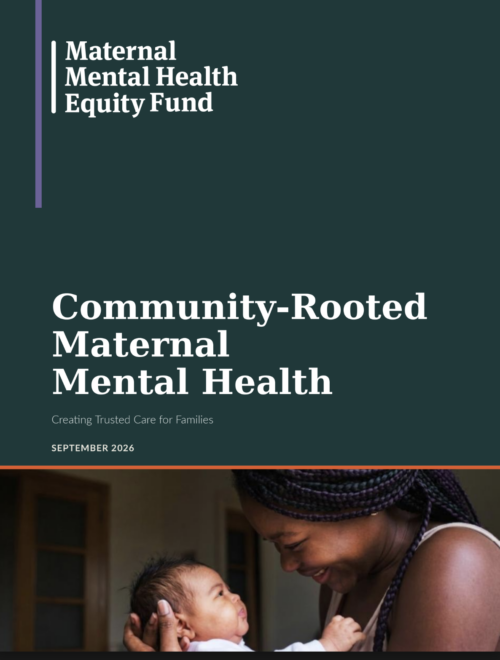
A new report from the Maternal Mental Health Equity Fund (MMHEF) shows that maternal mental health support works best when it is community-rooted, culturally-driven, and responsive to the complexity of families’ lives.
Across seven organizations around the country, the report shows how trusted community organizations are integrating mental health support into the relationships and services families already rely on. Their work spans prevention, early identification, and access to more intensive care when needed, from pregnancy and postpartum through early childhood and broader family life.
Episcopal Health Foundation is proud to have joined a national group of funders in May 2024 with a $375,000 investment in MMHEF to support a four-year cohort of grassroots organizations that are strengthening maternal mental health in their communities.
For EHF, this work is closely tied to our commitment to improving health, not just health care, for all Texans. Mental health is a leading preventable cause of maternal mortality, and too many mothers still do not receive the support they need. The report’s findings underscore why EHF is investing in models that center trusted relationships, elevate community expertise, and point toward more inclusive systems of care and sustainable financing.
One of the seven organizations selected for the MMHEF cohort is Todos Juntos Learning Center, an Austin-based organization and current EHF grantee that supports mothers through trusted, family-centered services. Its selection into the cohort recognizes the strength of community-led maternal health work already happening in across Texas.
With support from MMHEF, Todos Juntos is expanding culturally-responsive mental health supports for mothers with young children, learning alongside peer organizations across the country, and bringing those lessons back to better serve families in Central Texas
Trust is the starting point
One of the clearest lessons from the report is that community-anchored trust is the foundation for effective maternal mental health support.
For families who have experienced barriers, stigma, or distrust in traditional systems, trusted community organizations can create spaces where concerns about stress, anxiety, depression, and emotional well-being surface earlier and more naturally.
That also means letting families set the pace. Across the organizations, families have multiple ways to connect with support and can enter, pause, or return as their needs change, rather than being expected to follow a rigid path through services.
This approach also recognizes that maternal mental health is connected to much more than a clinical diagnosis. Non-medical drivers of health like food and nutrition, transportation, social connection, and many other conditions in families’ lives can all affect well-being. Several organizations are addressing these barriers alongside mental health support, often before a crisis develops.
What this looks like in Texas
Todos Juntos provides a strong example of that approach here in Texas.
The organization works with families in Austin through a dual-generation model that connects early learning, family support, adult education, workforce development, and mental health care.
Through its Saludables Juntos program, Todos Juntos embeds bilingual counseling, postpartum emotional support, crisis intervention, parenting workshops, and case management into the places where families already learn and connect.
Instead of requiring a mom to find and navigate a separate mental health system, support can begin within relationships she already trusts. That helps remove barriers including language, stigma, past trauma, and fear of institutional systems.
Mental health conversations can also emerge naturally in peer-based groups. Because mental health support cuts across Todos Juntos’ early childhood, adult education, and workforce programs, families can connect with help when and where they feel ready.
The report points to encouraging results. Todos Juntos reports fewer early childhood behavioral concerns and sustained participation in workforce programs, despite the economic, immigration-related, and other stresses families are experiencing.
Lessons for philanthropy
The report also makes clear that trusted community organizations need more than short-term program funding to sustain this work.
Funders can support culturally-rooted staff and peer leaders, strong screening and referral processes, data systems, partnerships with clinical providers, and the organizational support needed to keep those efforts going.
The report also cautions against assuming public financing alone can sustain community-based maternal mental health services. Flexible philanthropic funding can help fill gaps that traditional reimbursement and public funding often don’t cover.
For EHF, these lessons go directly to how we think about improving maternal health. Better outcomes require addressing barriers both inside and outside the health care system and investing in solutions shaped by the people and communities they are designed to serve.
Todos Juntos and the other organizations in this national cohort show what that can look like. Instead of asking families to navigate another system, we can strengthen the trusted community connections they already have and make mental health support part of the care and support families receive throughout their lives.