The loss of food assistance for hundreds of thousands of Texans is a growing concern for health across the state. And with more federal changes still ahead, the situation could get worse. That’s why Episcopal Health Foundation is supporting Call to Feed the Hungry, a growing statewide, nonpartisan effort bringing together faith communities, nonprofit organizations, and Texans from all backgrounds to protect access to food assistance.
Since July 2025, more than 700,000 Texans are no longer receiving benefits through the Supplemental Nutrition Assistance Program (SNAP), formerly known as food stamps. More than 360,000 of them are children.
Changes under H.R. 1, the federal law passed in July 2025, have tightened SNAP eligibility requirements and shifted more of the cost of the program to states. EHF estimates Texas could face $800 million to $1 billion in additional annual costs to maintain SNAP. That will be an important funding decision facing state lawmakers when the Texas Legislature convenes in January 2027.
SNAP provides 90% of food assistance in Texas. Churches, food banks, nonprofits, and other charitable organizations provide the remaining 10%. While these organizations continue to do essential work in communities across Texas, they cannot make up for the loss of SNAP assistance on their own.
Food insecurity is a health issue
Access to affordable, nutritious food helps children develop, reduces stress on families, and helps prevent and manage chronic conditions like diabetes.
Findings from EHF’s Texas Health Tracking Poll show just how closely food insecurity is connected to poor health:
Food-insecure Texans are 4.5 times as likely to experience problems paying medical bills as those who are food secure.
Nearly half of Texans who regularly run short of food report fair or poor physical health.
Almost half also report fair or poor mental health.
57% of Texas households affected by diabetes or prediabetes say they cannot afford balanced meals.
These findings help explain why protecting access to food assistance is about much more than addressing hunger. It’s also about preventing illness, managing chronic conditions, and reducing barriers to good health.
Food & Nutrition Security is one of EHF’s three Priorities for Change. Connecting more Texans to programs like SNAP is also an important part of Maximizing Connections to Health Insurance Coverage and Benefits, one of our six Impact Drivers focused on changing systems and removing barriers to improve health across Texas.
A growing statewide Call to Feed the Hungry
This holiday season, more than 70 faith and nonprofit leaders and 6,000 Texans have joined Call to Feed the Hungry, a statewide, nonpartisan, interfaith campaign led by the Episcopal Diocese of Texas with EHF as a key partner.
The effort brings together people of all faiths, and those with none, to urge Texas decision-makers to fully fund SNAP and protect access to food assistance.
The campaign is reaching more Texans this holiday season through newspaper ads, videos, community outreach, and resources that congregations and organizations can share.
At the center of the effort is a simple message: Churches and charities will continue doing their part to feed hungry Texans, but government also has an essential role to play.
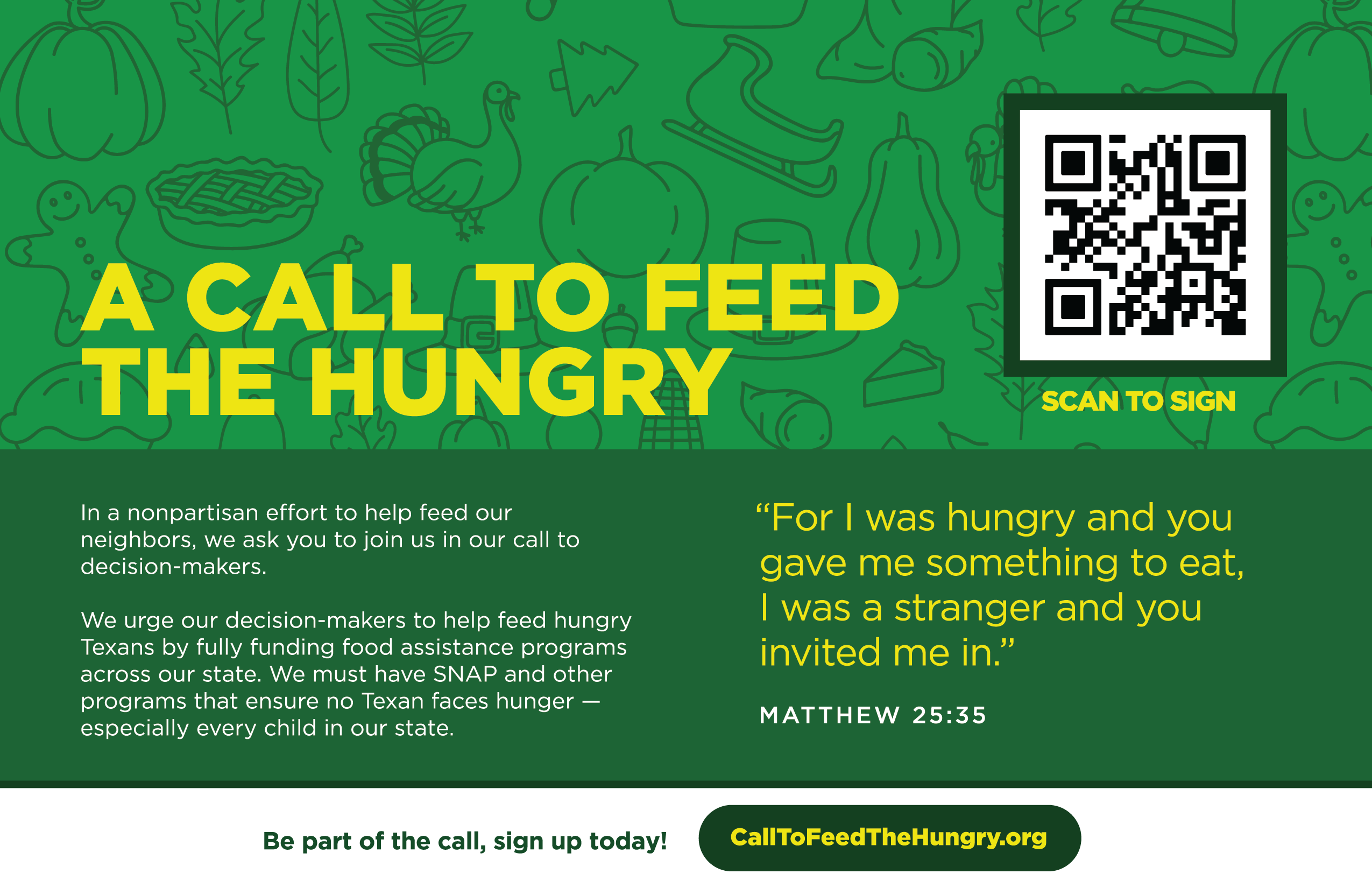
Be part of the call
Texans can add their names to Call to Feed the Hungry, receive information about SNAP, and learn about opportunities to make their voices heard ahead of the 2027 legislative session.
Signing up is not a political endorsement or petition. It’s a way to join thousands of Texans who recognize the importance of food assistance to the health and well-being of our communities.
The campaign website also offers videos in English and Spanish, information about SNAP, downloadable materials for congregations and community organizations, and ways to support local food ministries.