Cycle 2 Grant Opportunties
JUNE–DECEMBER 2026
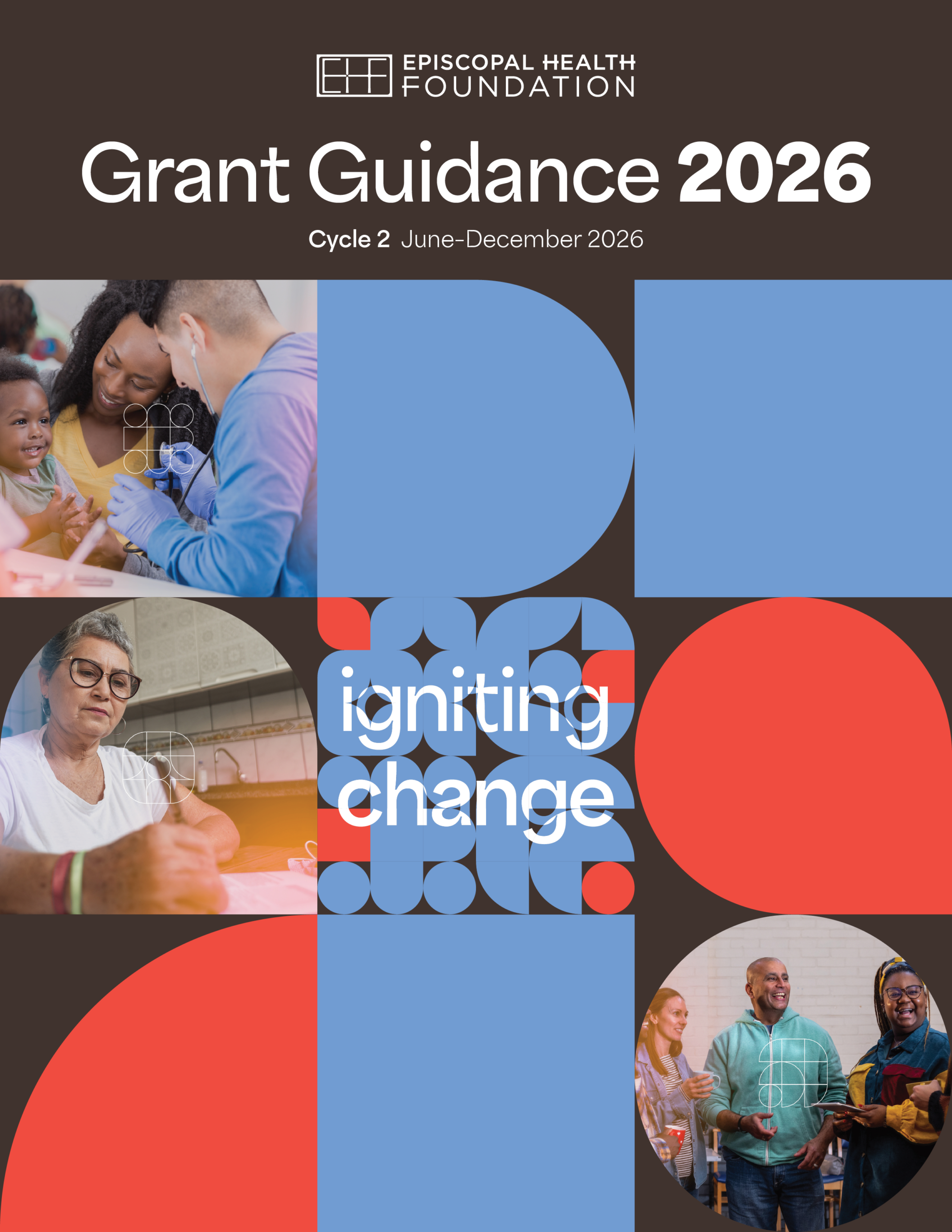
Episcopal Health Foundation is pleased to share updated Grant Guidance for Cycle 2 as part of our finalized Strategic Framework 2025–2030. This framework guides work to change systems and remove barriers to improve health, not just health care, for all Texans.
Please review EHF’s Strategic Framework and Grant Guidance before applying.
We invite existing and new partners, community-based groups, service providers, policy advocates, collaborative networks, and other organizations to explore EHF’s funding opportunities.
During Cycle 2, EHF will prioritize the following Impact Drivers:
EHF’s grant application process begins with submitting a brief Letter of Inquiry (LOI) for Cycle 2 through our online grant application portal beginning June 23, 2026.
If you’re a first-time applicant, we encourage you to register now on the grant application portal so you’re ready ahead of the June LOI launch.
Reminder: Cycle 1 grant awards will be announced on May 28, 2026.
Learn More
Learn more about Grant Opportunities for Cycle 2 in this updated webinar about EHF’s finalized Strategic Framework and Grant Guidance. We walk through the framework, explain the Impact Drivers, and share complete details about the open-call grant application process.
EHF makes grants to nonprofit, tax-exempt organizations whose work relates directly to EHF’s Strategic Framework. To be eligible, an organization must have received an Internal Revenue Service Determination Letter indicating that it is an organization described in Section 501(c)(3) or 170(c) and is not a private foundation within the meaning of Section 509(a) of the U.S. Internal Revenue Service Code.
All grants funded by EHF must be implemented within the 81-county service area of the Episcopal Diocese of Texas.
Funding Eligibility
What does EHF not fund?
While the below activities and expenses are valuable for the communities they serve, EHF’s strategic framework does not prioritize the following:
- Grants to individuals
- Grants to underwrite conferences, luncheons, galas or fundraisers, or special events such as health fairs
- Grants for scholarships and/or grants to schools for academic purposes
- Grants for religious purposes or congregational ministries
- Grants to public agencies for routine service provision
- Grants to retire operating deficits or debt except by invitation
- Grants for acute care, inpatient care or long-term care institutions
- Grants for emergency assistance organizations for routine service provision except by invitation from EHF
- Direct or indirect support for candidates, political parties, 501(c)(4) organizations or Political Action Committees
- Grants for programs within the child welfare or foster care system
- Grants for childcare or education services
- Grants for social isolation or social cohesion programs
- Grants for safety or criminal justice initiatives
- Grants for transportation services
- Grants for vocational services or workforce development (with exception for community health workers (CHWs), prioritized in our strategic priorities)
- Grants for climate or environmental initiatives
- Grants for the direct purchasing of food
- Grants for ongoing medication costs (absent of systems, policy, or care-model integration)
What are examples of efforts currently prioritized by EHF?
EHF supports efforts that align with our current Grant Guidance, and prioritizes:
- Food and Nutrition Security, Maternal Health, and Diabetes Prevention (2025-2030 EHF Priorities for Change)
- Integration among Health and Health Care Services, Healthy Communities, and Health Policies (2025-2030 EHF Action Areas)
- Efforts that strengthen comprehensive care, accelerate innovative health financing, activate community voices, maximize connections to Health Coverage and Benefits, Support Community Health Workers (CHWs), and/or promote multi-sector collaboration (2025-2030 EHF Impact Drivers)
- Efforts that serve, or are in service to, low-income Texans, including those who are uninsured or under-insured.
- Systems integration and/or regional coordination efforts.
- Efforts to address Non-medical Drivers of Health (NMDOH) that are reimbursable (through health payors) and sustainable beyond EHF support.
- Efforts to protect and expand coverage and utilization of public benefits.
Are there any populations or health conditions not funded by EHF?
Due to capacity and funding limitations, EHF is unable to provide grants that target specific populations (outside of our strategic priorities). As an example, EHF will support initiatives focused on pregnant and parenting Texans (due to our maternal health priority area) but will not fund programs solely targeting older adults.
Due to EHF’s focus on comprehensive health care, we do not provide grants for disease- or condition-specific organizations outside of our strategic priorities.
Does EHF support mental and behavioral health services?
EHF prioritizes mental and behavioral health services that are integrated into comprehensive primary care settings or are offered through a Certified Community Behavioral Health Clinic (CCBHC). EHF may consider independent behavioral health organizations in rural counties, or when in service to a population named within our strategic framework (i.e. maternal mental health services for pregnant and parenting Texans). If you have questions about whether your request would be competitive, please contact your Program Officer.
Currently, EHF does not support substance use programs.
Does EHF provide capital funding?
Unless invited by EHF, grants for capital projects are not accepted. EHF does not fund capital costs such as building costs, housing repairs, parks, and playgrounds.
Are all clinics supported by EHF?
EHF funds clinics that offer full reproductive health care and accept public insurance, and/or receive federal funding. These eligible clinics typically include Federally Qualified Health Clinics (FQHCs), FQHC Look A Likes, and Local Mental Health Authorities (LMHAs).
Does EHF fund new projects or pilot grants?
Yes, EHF will consider grants for new projects and pilot projects. Before submitting a LOI or application, please contact your Program Officer to discuss your idea. Your PO will likely ask about the plans for learning, implementation, and long-term sustainability.
Does EHF make grants to support research?
Generally, we do not make grants for research or research-related activities. At times we may commission research from others that support our work. A request for proposal process is generally used in those circumstances. You can learn more about EHF’s research activities and initiatives here.
Can my organization submit more than one LOI or application?
We ask that organizations only submit one LOI per cycle. If you have questions or want to discuss this further, reach out to your Program Officer.
Application Process & Online Grant Application Portal
Who do I contact if I have questions about the online grant application process or need technical support?
Email us at applicationassistance@episcopalhealth.org.
Who do I contact if I have programmatic questions about my current grant?
- Your Program Officer is the best contact for questions about your grant goals, activities, or outcomes. Their contact information is included in your grant application invitation email. Their name is also on your grant application in Fluxx.
- If you need help reaching your Program Officer or one has not yet been assigned to you, please reach out to applicationassistance@episcopalhealth.org.
What do I do if I forget the password to my current grant portal account?
- On the Online Grant Application portal login page, select the option to reset your password.
- Enter the email address associated with your existing account.
- The system will verify your email and send instructions to create a new password.
What do I do if I want to change the email or password on my existing application account?
- To change your password, go to the online grant application portal login page and click the “Forgot Password”.
- To update the email address linked to your account, contact the Grants Management Team at applicationassistance@episcopalhealth.org.
Is there a User’s Guide available for EHF’s current online grant application process?
Yes, click here to view the grant portal login instructions for new applicants and for returning grantees.
Can multiple users share the same online grant application portal account?
Because the grant application portal uses multi-factor authentication, we strongly recommend users do not share accounts. If multiple users need access, each individual should request their own log in.
Do I have to select an Impact Driver during the application process?
Selecting a specific Impact Driver(s) is not required during the application process as EHF will determine the most appropriate alignment during review.
How do I submit an Letter of Inquiry (LOI) for general operating support?
General operating grants are new for EHF so they haven’t been incorporated into our regular grant application cycle. If you would like to be considered for a general operating grant, please reach out to your Program Officer.
When is the right time to reach out to a Program Officer regarding my interest in applying for a grant?
EHF values relationships with our partners and transparency in our process, so grantee partners and potential applicants are welcome to talk with a Program Officer at any time during the year.
Reach out directly to the Program Officer listed in your Fluxx account, or email applicationassistance@episcopalhealth.org to be connected.
Why was my Letter of Inquiry (LOI) or grant application declined?
EHF’s Board of Directors makes the final decision on whether to approve or decline each grant. Because funding requests far exceed our available budget, we cannot support every worthy project. A decision not to fund a proposal does not reflect on the merits of the proposal or the applicant organization.
May 28, 2026
Cycle 1: Notification of Award
Cycle 2 Grant Opportunities
June 23, 2026
LOI Open
July 10, 2026
LOI Due at 5 p.m.
September 4, 2026
Application Due at 5 p.m.
December 18, 2026
Cycle 2: Notification of Award
EHF’s Letter of Inquiry (LOI) process is designed to help us learn about your work and how it connects to our shared goals for systems change in Texas. Please be concise, but do not worry about perfect phrasing. We are most interested in understanding your purpose, approach, and connection to the community.
To submit an LOI, please log into EHF’s online grant application portal. You will find the “Start an LOI” link at the top of the grant portal overview page. If you have any issues registering or logging into the portal, please reach out to applicationassistance@episcopalhealth.org.
LOI QUESTIONS:
- Project Purpose (150 characters or less) Describe the main focus or goal of this project.
- Project Rationale (1800 characters or less)
Please use the following questions to guide your response:· What unmet need or opportunity does this project address?
· How do you plan to address it through this project?
· At the end of the project, what will “success” look like?
- Project Budget
· What is the total project budget?
· How much funding are you requesting from EHF?
- Project Timeline
· Anticipated start date
· Estimated duration (in months) the requested funding would cover
Note: If approved for a grant award, all project start dates must correspond to the timing of the EHF grant cycle that you are applying for. If you’re applying in the first half of the calendar year, please enter “July 1” as your start date. If you are applying in the second half of the calendar year, please ender “February 1″ as your start date. - Geography
· From which county will this grant be administered? Which county or counties in the Episcopal Diocese of Texas will this project directly impact? Select up to 10 counties.Note: “All 81 counties” is also an option.