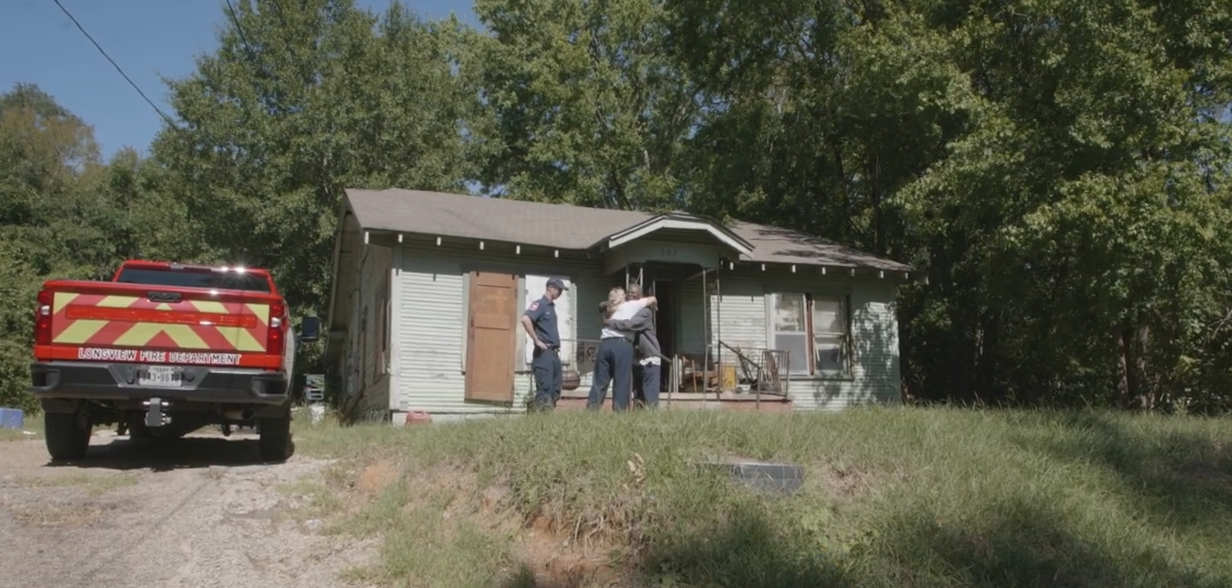
When people repeatedly call 911, it is often a sign of deeper challenges such as untreated chronic conditions, limited access to basic care, lack of transportation, or many other non-medical issues. A new evaluation of the Greater Longview Optimal Wellness initiative, known as GLOW, shows that addressing those non-medical, root causes can significantly reduce emergency medical service use.
GLOW operates in Longview and is part of the Texas Accountable Communities for Health Initiative (TACHI), a statewide effort launched and supported by Episcopal Health Foundation. Through TACHI, EHF invests in local collaboratives like GLOW that bring together health care providers, emergency responders, social service agencies, and local government to improve health by addressing the non-medical drivers of health that shape outcomes long before a crisis occurs.
GLOW focuses on residents who frequently rely on emergency services. Instead of responding only to immediate crises during 911 calls, GLOW connects participants to coordinated, ongoing support that helps stabilize housing, improve access to health services, address behavioral health needs, and strengthen daily living supports like food and transportation.
A second-year evaluation of GLOW conducted by researchers at the Institute for Health Innovation, Data Science, and Research and the School of Nursing at The University of Texas at Tyler found meaningful results:
1. Emergency service use dropped significantly.
Participants in the GLOW program used EMS far less after enrolling. Among residents who joined in 2022, EMS trips fell from 408 before enrollment to 152 two years later, a reduction of more than 60 percent.
2. Participants face multiple overlapping challenges.
Most GLOW participants reported several unmet non-medical needs at the same time, including financial strain, transportation barriers, food insecurity, and behavioral health concerns. More than three quarters of participants reported six or more needs affecting their health and stability.
3. Hundreds of residents have been connected to ongoing support.
As of mid-2025, GLOW had enrolled 324 residents with repeated documented EMS trips, many of whom remained actively engaged with services designed to stabilize their health, improve access to care, and address everyday needs that often lead to repeated emergency calls.
For EHF, GLOW demonstrates that when communities align partners, data, and local leadership around the drivers of health, the result is fewer unnecessary 911 calls and stronger, more stable systems of support for families in East Texas.