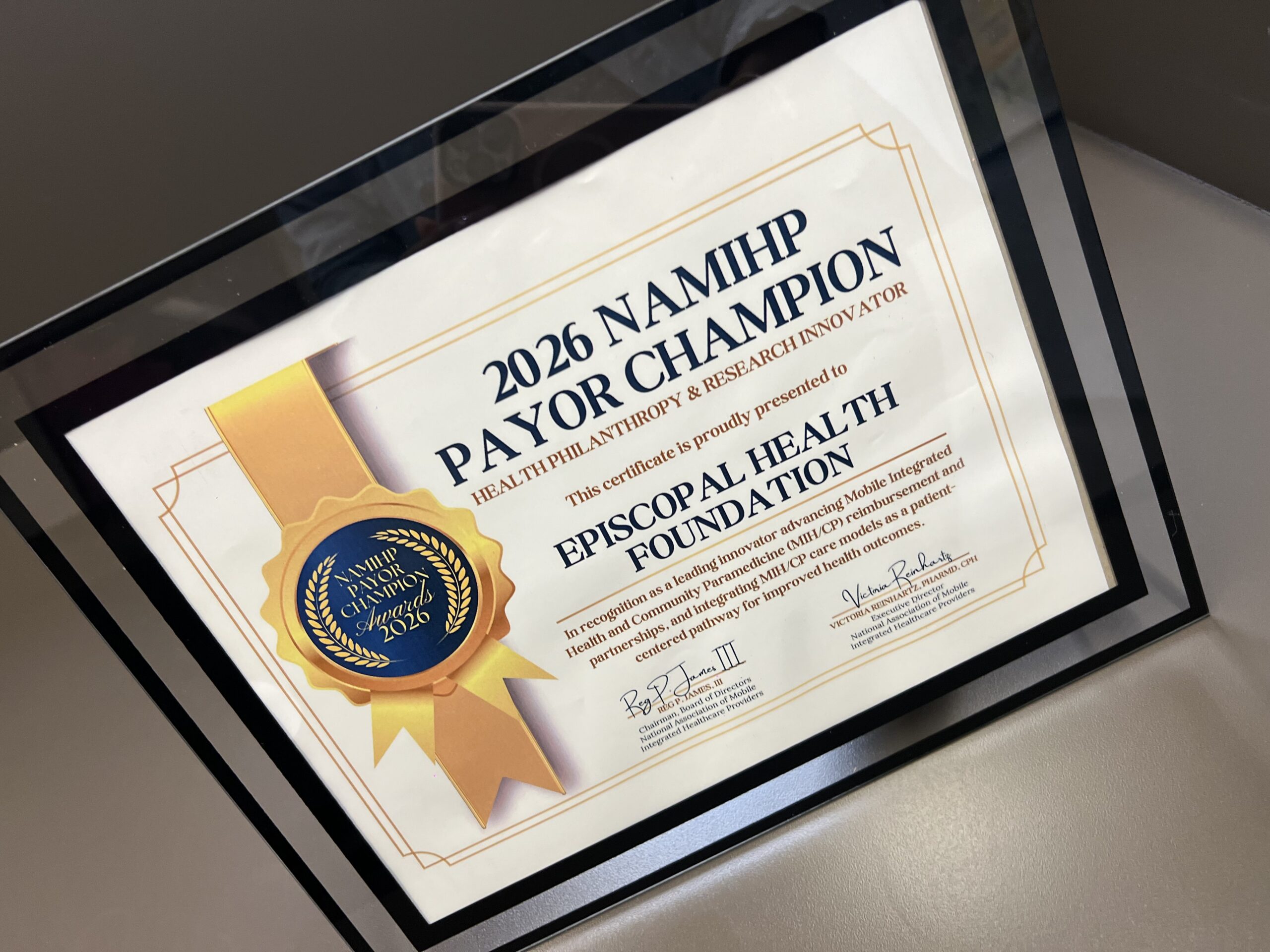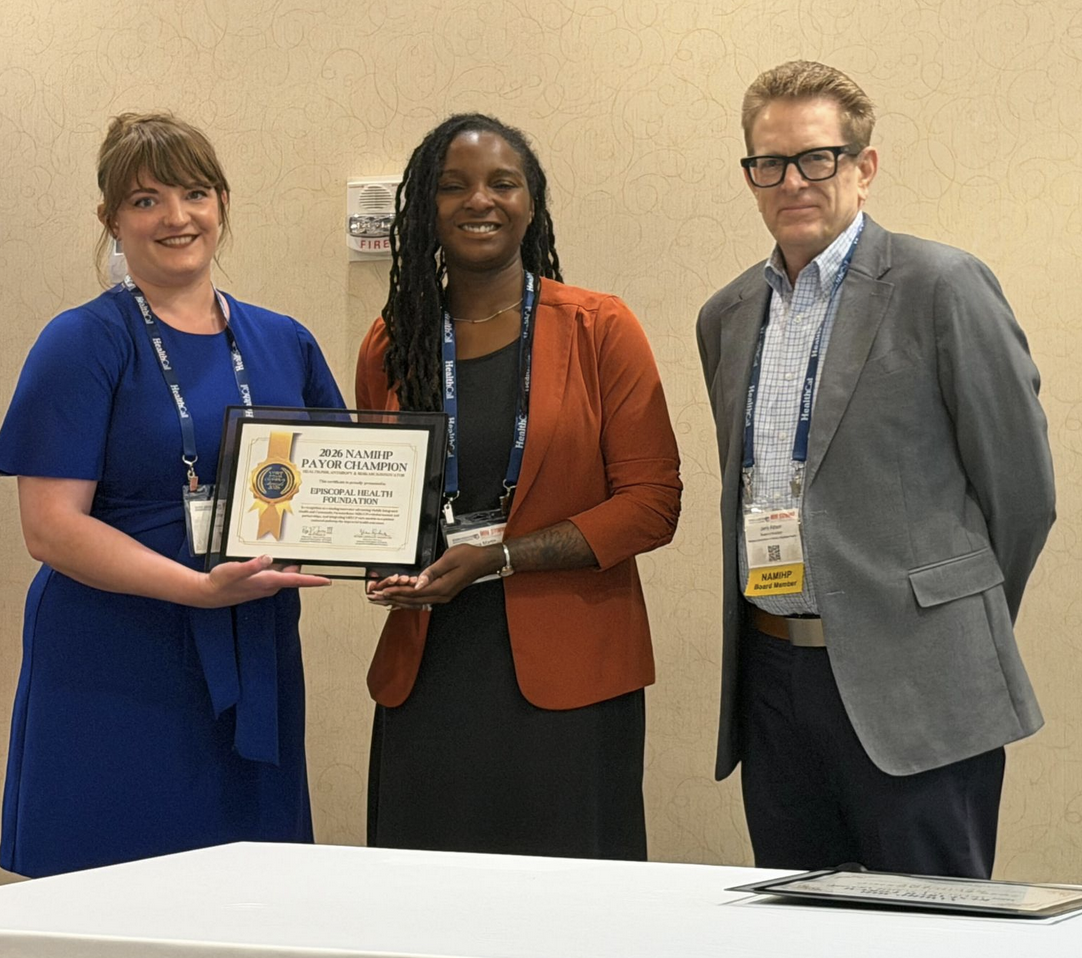
Episcopal Health Foundation was recently recognized with the first-ever Health Philanthropy and Research Innovators award by the National Association of Mobile Integrated Healthcare Providers (NAMIHP).
This award recognizes work to better connect emergency services, health care, and community organizations so people can get non-medical and social support earlier, before a situation becomes a crisis. It also reflects a broader shift in health care toward value-based care, where payment is tied to keeping people healthy, not just treating them when they’re sick. Community paramedicine is becoming a key part of that approach.
Briana Martin, EHF’s research and Policy Officer and Amy Willa, research and evaluation associate, accepted the award at NAMIHP’s MIH Summit in March.
EHF has funded programs and evaluated results to understand how these non-medical approaches are changing health outcomes.
In Longview, the GLOW effort is reducing 911 calls by connecting people to the right non-medical support – things like food, transportation, and follow-up mental health services. GLOW is one of six multi-sector community efforts participating in EHF’s Texas Accountable Communities for Health Initiative. TACHI brings local partners together to address non-medical drivers of health and create community-led, sustainable solutions that improve health.
Through EHF’s evaluation of a community paramedicine program with Molina Healthcare, a health insurance company that partners with states to provide Medicaid coverage and works with providers to improve how care is delivered, we saw similar results. When people have consistent support and someone they trust checking in, they are better able to manage their health and avoid emergency care.
The takeaway is straightforward. Health is shaped by more than what happens in a clinic or hospital. And when care reaches into the community to address non-medical needs, health outcomes improve.
This work also shows what it takes to make these approaches last. Strong partnerships across sectors. Flexibility to meet real needs. And data that helps everyone understand what’s working.
That’s where philanthropy plays a role beyond funding.
By supporting programs, investing in research, and bringing partners together, we can help turn what’s working into something sustainable.