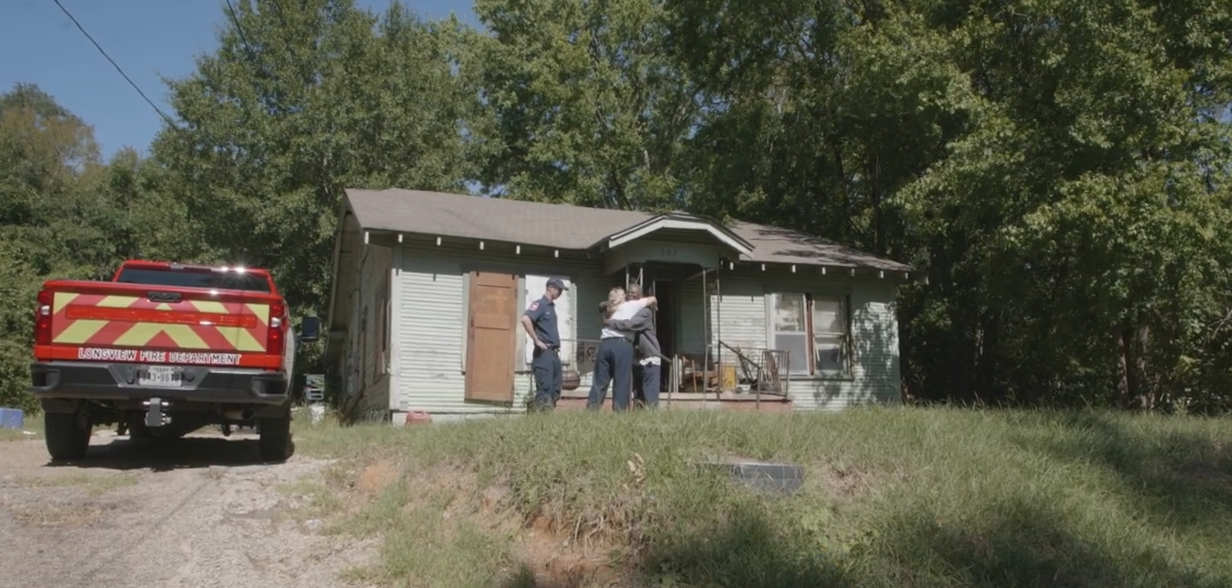
After his home was damaged, a Longview resident found help through Greater Longview Optimal Wellness (GLOW), one of six TACHI sites across the state.
Three collaboratives in the Texas Accountable Communities for Health Initiative (TACHI) have recently secured major public funding that strengthens their long-term sustainability and expands their ability to address non-medical factors that shape health.
Two collaboratives secured four-year, multi-million-dollar HOPES grants from Texas Health and Human Services, which fund parenting and family services for expecting families and families with young children, and a third TACHI site has now been included in its city’s annual budget.
“Our original vision described TACHI as a catalyst for building lasting, community-based partnerships and the hope was that the work would outlast philanthropy,” says Dr. Ann Barnes, president and CEO of the Episcopal Health Foundation (EHF). “These new investments show how local partnerships can build the staying power needed to improve health well beyond one grant cycle.”
TACHI is a multi-year effort co-funded by EHF and St. David’s Foundation that brings community voices together with health care providers, social service organizations, local governments, and other non-health partners to address the non-medical factors that impact health every day. Each of the six TACHI community sites is building a coordinated network that listens to local priorities, identifies barriers to well-being, and designs practical, sustainable solutions rooted in lived experience. Sites are tackling health-related issues like basic needs, economic stability, safe housing, reliable transportation, food security, and more.
Bastrop County Cares, which leads a collaborative effort focused on economic stability, education, health, and thriving communities, will receive $974,000 per year as part of the state’s HOPES grant program. The grant strengthens the site’s work to improve economic stability for new mothers through coordinated community partnerships.
Brazos Healthy Communities in Brazos County, along with Project Unity, will receive $1.7 million per year as a HOPES grantee. Their model relies on trusted community health workers who help families navigate medical care, connect to social support, and address the everyday factors that shape maternal and child health.
In Longview and Gregg County, Greater Longview Optimal Wellness (GLOW) is now written into the City of Longview’s annual budget with $525,215 dedicated to its work. GLOW’s coordinated response model brings together the city’s police and fire departments, the local mental health authority, health care partners, and community organizations to address non-medical needs during 911 calls. The approach helps reduce unnecessary ER visits by connecting residents to local support systems that can resolve underlying non-medical issues.
“You can describe it on paper, but these groups are proving that good things happen when there’s a long-term commitment to building solutions that begin with the voices and lived experiences of those closest to the challenges,” Barnes says. “Multi-sector collaboration is one of the most powerful ways to spark real, lasting change.”
Learn more about the Texas Accountable Communities for Health Initiative at www.txachi.org.